
Raising kids means teaching them how the world works—how to cross the street, how to talk to strangers, how to make good choices. But some of the most important safety lessons happen much closer to home.
Your house is where your children sleep, play, eat, and grow. It’s also filled with systems, tools, and potential hazards they don’t fully understand yet. The goal isn’t to make them anxious about their environment. It’s to help them become aware, capable, and confident inside it.
When children understand how their home functions—and what to do when something seems wrong—they feel empowered instead of afraid. Over time, small lessons build lifelong habits.
Start With a Home Safety Walk-Through Kids Can Understand
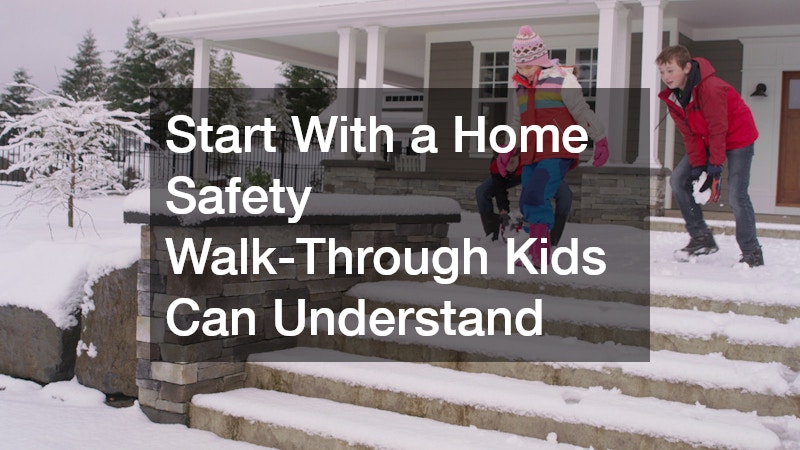
One of the simplest and most effective ways to begin teaching home safety is to walk through your house together. Not a rushed reminder shouted from the kitchen, but an intentional tour.
Frame it as something special: ”Today, I’m going to show you how our house works.”
As you move from room to room, explain things in language your child can grasp. You don’t need technical explanations. Instead, focus on purpose and boundaries.
For example, you might say:
- ”This box on the wall controls the electricity. Only adults open it.”
- ”These pipes carry water through our house. If we ever see water where it shouldn’t be, we tell a grown-up right away.”
You can explain that when something goes wrong with wires or outlets, a trained electrician fixes it to keep everyone safe. If there’s a leak or pipe issue, a licensed plumber handles those repairs. Kids don’t need to understand the mechanics—but they should understand that certain systems are serious and handled by professionals.
Point out ”look but don’t touch” areas:
- The breaker panel
- Under-sink plumbing
- The water heater
- Garage tools
Then ask your child to repeat the rules in their own words. When they explain it back to you, they internalize it.
Revisit this walk-through every year or so. A six-year-old and a ten-year-old can handle very different levels of responsibility. What begins as ”don’t touch” can later become ”tell me if you notice something unusual.”
Teach Electrical Safety Through Everyday Habits
Electrical safety doesn’t need to be dramatic to be effective. In fact, it works best when it becomes part of normal life.
Start with simple, repeatable rules:
- Always unplug by pulling the plug, not the cord.
- Never put anything into an outlet except a plug.
- Keep liquids away from electronics.
Demonstrate the right way to plug in a device. Show them how to check that cords aren’t frayed. If you see a damaged cord, explain why that’s unsafe rather than just replacing it silently.
Children are observant. If they see lights flicker, or an outlet feel warm, encourage them to report it. Let them know that noticing small changes is helpful, not annoying.
You might say, ”If you ever see sparks or smell something strange, come get me immediately.” Role-playing that scenario once can make it stick.
If work ever needs to be done in your home, you can mention that a professional electrician knows how to safely handle wiring and power. That reinforces the idea that electricity is powerful—and should be respected.
Instead of fear-based warnings, aim for respect-based habits. Electricity isn’t the enemy. Carelessness is.
Help Kids Understand Water Safety Inside the Home
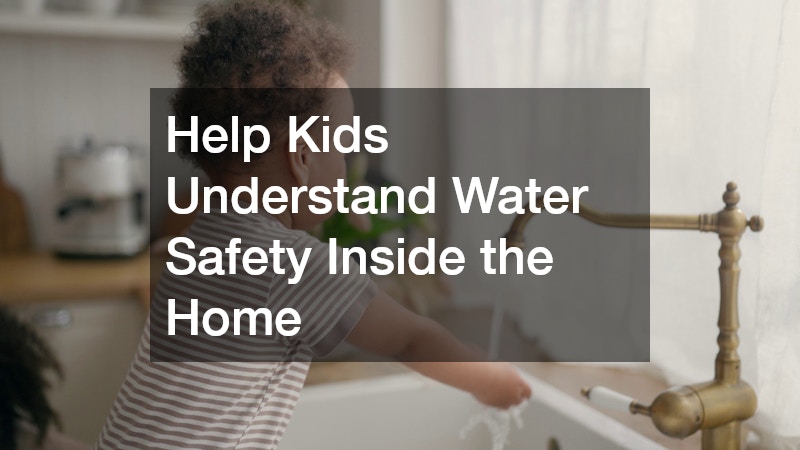
Water seems harmless—until it isn’t.
Many household accidents start with water where it doesn’t belong. Slippery floors, overflowing sinks, backed-up toilets. These are preventable with awareness.
In bathrooms and kitchens, explain what can and cannot go down drains. Make it concrete:
- Only toilet paper goes in the toilet.
- Food scraps belong in the trash unless a grown-up says otherwise.
- Hair belongs in the trash, not the sink.
Explain how clogged drains happen in simple terms: ”When too much stuff goes down, it gets stuck and blocks the water.” If they see water rising instead of draining, their job is not to fix it—but to tell an adult right away.
You can even turn it into a small science lesson. Pour water through a strainer with paper scraps in it and show how the flow slows down.
Mention that when plumbing issues are serious, a licensed plumber repairs them to prevent damage. Framing it this way normalizes asking for help when something breaks.
Also emphasize slip prevention:
- Wipe up splashes immediately.
- Don’t run on wet tile.
- Let an adult know if a faucet won’t turn off completely.
Water safety inside the home is mostly about attention and communication. Teach your child that noticing small problems early protects the whole family.
Make Heating and Cooling Safety Easy to Remember
Your heating and cooling system works quietly in the background. Because it’s invisible most of the time, kids rarely think about it.
That’s why it helps to make it visible in conversation.
Start by showing them where vents are located. Explain that these openings allow air to move through the house. Toys, books, and blankets shouldn’t block them.
You can say, ”If we block the vents, the system has to work too hard.” That’s enough detail for a child.
If your home recently had an AC installation, you might explain that an HVAC company helps keep the air clean and the temperature comfortable. It’s not about memorizing terms—it’s about understanding that systems require maintenance.
Talk about warning signs in simple language:
- ”If you smell something burning when the heat turns on, tell me.”
- ”If one room is freezing and another is very hot, that’s important.”
If your family ever needs heating replacement, explain that big equipment sometimes wears out and has to be changed for safety and comfort. Kids benefit from understanding that home systems age just like appliances.
Space heaters deserve special attention. Teach a clear boundary—at least three feet away. Make that distance measurable. Have your child physically step it out.
The more familiar they are with how heating and cooling work, the less mysterious—and less risky—it becomes.
Prevent Mold and Moisture Problems Together

Moisture doesn’t seem dangerous. But in a closed environment, it can quietly create bigger problems.
Rather than delivering a lecture about mold, show your child how humidity feels. On a humid day, ask, ”Does the air feel sticky?” Then explain that too much moisture indoors can cause damage over time.
If you use a dehumidifier, show them what it does. Let them see the collected water in the tank. Explain that it pulls extra moisture from the air to keep things dry and healthy.
Make moisture prevention a shared responsibility:
- After showers, leave the door open or turn on the fan.
- Wipe spilled water from counters.
- Tell an adult if they see peeling paint or dark spots.
You can even assign a rotating ”moisture monitor” role for older kids—someone who checks that the bathroom fan runs after showers.
This approach shifts safety from reactive to proactive. Instead of waiting for a problem, you’re teaching your child how to prevent one.
Set Clear Rules for Outdoor and Garage Safety
The garage and yard are extensions of your home—but they often contain the highest concentration of hazards.
Tools, chemicals, ladders, vehicles. And sometimes, construction debris.
If you ever have renovation work done, there may be a roll-off dumpster in the driveway. To a child, it can look like an oversized treasure chest. Make it clear that dumpsters are not play areas. Climbing inside or on them is unsafe.
Walk through the garage and establish boundaries:
- Which shelves are off-limits.
- Where bikes may be ridden.
- Why vehicles are never to be approached when running.
If your property includes an access control gate system, explain its purpose. It helps protect the home and manage entry. Teach your child never to open it for strangers and to notify you if it’s left open unexpectedly.
A helpful practice is the ”Stop and Check” habit. Before stepping into the driveway or yard, pause and look around. Is a car backing up? Is the equipment in use?
Role-play situations:
”What would you do if the gate were open and no adult was outside?”
”What if you dropped a ball near the street?”
Practicing responses in calm moments makes real-life decisions easier.
Teach Safe Behavior During Home Improvement Projects
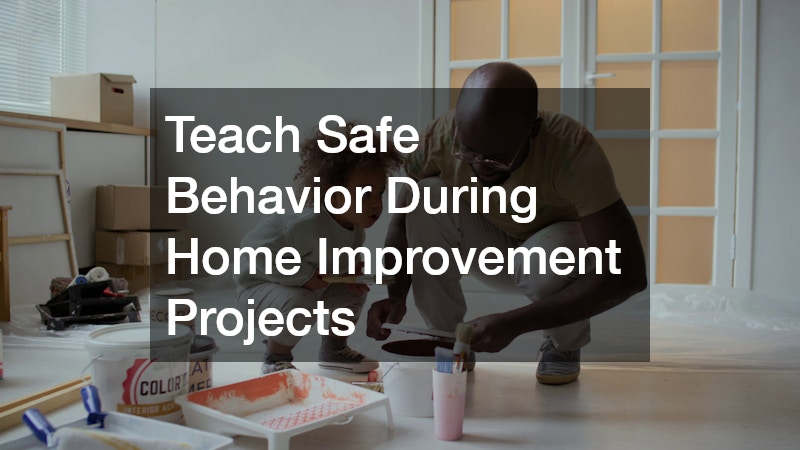
Home projects are exciting. New paint, new fixtures, maybe even new equipment being installed. But they also introduce unfamiliar tools and strangers into your space.
Before work begins, gather your kids and explain what will happen. If a mini split AC installer is coming to upgrade a cooling system, tell them that this person has special training and will be using tools that are not toys.
Set physical boundaries. Painter’s tape on the floor works well for younger children. Call it the ”safety line.” Crossing it without permission isn’t allowed.
If wiring work is involved, explain that an electrician may need to turn off power temporarily. Reinforce that cords, drills, and ladders are never to be touched.
Encourage curiosity—but safely. Let them watch from a distance. Let them ask questions through you, not directly, while someone is working.
This teaches two powerful lessons:
- Skilled work requires training.
- Safety zones are non-negotiable.
Kids who understand this dynamic are less likely to wander into unsafe areas during future projects.
Practice Emergency Response in a Calm and Empowering Way
Emergency education shouldn’t begin during an emergency.
Instead of waiting for something to go wrong, walk through scenarios when everyone is calm.
Ask open-ended questions:
- ”If water suddenly started leaking from under the sink, what would you do?”
- ”If you smelled something strange from the vents, who would you tell?”
Explain that sometimes families call an HVAC company to check heating or cooling issues, or a licensed plumber to handle water leaks. Kids don’t need to make those calls themselves—but they should understand the chain of action.
Teach them how to:
- State their full name.
- Say their address.
- Describe a problem simply.
You can even practice mock phone calls. Keep it light. Laughter helps memory stick.
Post emergency numbers at child height on the refrigerator. Not hidden in a phone.
The goal isn’t to turn your child into a crisis manager. It’s to reduce panic by building familiarity.
Create a Simple Family Safety Plan Kids Can Follow
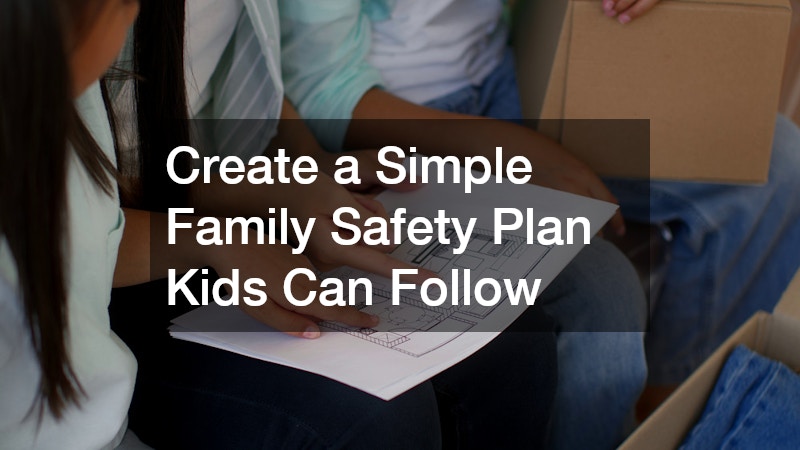
A safety plan should be simple enough for a child to recall under stress.
Start with two meeting spots:
- One inside the house.
- One outside.
Draw a basic map together. Let your child label rooms and exits. The act of drawing reinforces memory.
Discuss what to do if systems fail. For example, if heating replacement is underway in winter and certain rooms are off-limits, clarify which areas remain safe and warm.
If you have an access control gate system, include instructions about where to wait if evacuation is necessary. Identify a neighbor’s home as a backup safe place.
Keep emergency supplies visible and accessible—flashlights, bottled water, blankets. Show your child where they are stored.
Revisit this plan every six months. As kids grow, update responsibilities. A teenager can assist younger siblings. A preschooler’s role might simply be to hold a parent’s hand.
Clarity reduces chaos.
Reinforce Safety Lessons With Responsibility and Routine
Safety is not a one-time conversation. It’s built through small, repeated actions.
Give children age-appropriate responsibilities. A younger child might be in charge of checking that bathroom towels are hung up to dry. An older one might help empty a dehumidifier tank when supervised.
Teach them to notice early warning signs—slow-draining water that could signal clogged drains, unusual humidity, and odd noises from appliances.
Praise attentiveness. When your child says, ”The sink is draining slowly,” respond with appreciation. That reinforces observation as a positive behavior.
Family meetings can include brief safety check-ins:
”Has anyone noticed anything unusual this week?”
”Are all pathways clear?”
By integrating safety into routine rather than isolating it as a lecture topic, you normalize awareness.
Children who grow up in this environment don’t view safety as restrictive. They see it as part of caring for a shared space.
Raising Confident and Capable Kids at Home
Teaching home safety is not about wrapping children in caution tape. It’s about gradually transferring awareness and responsibility.
When kids understand how their environment works—where boundaries exist, what warning signs look like, who to tell when something seems wrong—they move through their home with confidence.
Small lessons compound over time. A child who learns not to block vents today becomes a teenager who respects heating systems tomorrow. A preschooler who practices emergency phone calls grows into an adult who stays calm under pressure.
Your home is more than a shelter. It’s a classroom for lifelong habits.
And the earlier you begin teaching those habits, the stronger they become.

